- The Recap AI
- Posts
- Michael Burry's new "Big Short" on AI
Michael Burry's new "Big Short" on AI
PLUS: An AI pioneer exits Meta and SoftBank sells its $5.8B Nvidia stake for OpenAI

David Roberts
November 12, 2025
In partnership with

Good morning, AI enthusiast.
The investor famous for the “Big Short,” Michael Burry, is now taking aim at the AI industry’s financial reporting. He claims that major cloud companies are using misleading accounting practices to artificially boost their profits.
His accusation suggests the real cost of the AI infrastructure boom is being hidden, potentially understating hardware depreciation by billions. With Burry placing major short bets against AI leaders, the big question is: are the record profits we're seeing built on a stable foundation or just creative bookkeeping?
In today’s AI recap:
Michael Burry’s AI accounting claims
An AI pioneer’s Meta exit
SoftBank sells $5.8B Nvidia stake for OpenAI
8 trending AI Tools
The 'Big Short' of AI?

The Recap: Famed “Big Short” investor Michael Burry is accusing major AI cloud providers of using aggressive accounting to artificially inflate their earnings. In a post on X, he alleges they are misrepresenting the depreciation of high-cost AI hardware.
Unpacked:
Burry’s core claim is that companies are extending the estimated “useful life” of AI chips beyond their realistic 2-3 year product cycle to lower annual expenses and boost profits.
He estimates this maneuver could understate depreciation by about $176 billion through 2028, potentially overstating profits at firms like Oracle and Meta by more than 20%.
The accusation comes after Burry recently disclosed major short bets against AI leaders Nvidia and Palantir, signaling his broader skepticism about the current AI hype cycle.
Bottom line: Burry’s claims cast a shadow of doubt on the reported profitability of the AI infrastructure boom. This serves as a critical reminder for investors and enthusiasts to look past the hype and carefully examine the financial fundamentals.
From Hype to Production: Voice AI in 2025

Voice AI has crossed into production. Deepgram’s 2025 State of Voice AI Report with Opus Research quantifies how 400 senior leaders - many at $100M+ enterprises - are budgeting, shipping, and measuring results.
Adoption is near-universal (97%), budgets are rising (84%), yet only 21% are very satisfied with legacy agents. And that gap is the opportunity: using human-like agents that handle real tasks, reduce wait times, and lift CSAT.
Get benchmarks to compare your roadmap, the first use cases breaking through (customer service, order capture, task automation), and the capabilities that separate leaders from laggards - latency, accuracy, tooling, and integration. Use the findings to prioritize quick wins now and build a scalable plan for 2026.
AI Tools of the Day
🚀 Softgen – Turn your app idea into a full-stack, deployable web application using only a simple text description.
🎵 LALAL.AI – Instantly isolate vocals, drums, bass, and other instruments from any audio or video file with stunningly accurate AI-powered stem splitting.
📦 Graswald-ai – Automatically convert simple product videos into interactive, photorealistic 3D models ready for e-commerce and AR without any 3D expertise.
🤖 Cline – Integrate an autonomous AI coding agent directly into VS Code to analyze your codebase, edit files, and execute terminal commands on your behalf.
🎬 Spingle.ai – Let an intelligent AI assistant automatically cull hours of raw footage and organize the best takes directly on your Premiere Pro timeline.
🎭 Xpression Camera – Transform yourself into anyone with a face in real-time on video calls and streams using a single photo and voice-driven animation.
🗺️ Maps GPT – Create highly customized and shareable maps for trip planning or discovery just by describing the places and vibes you're looking for.
💬 RPLY – Reclaim your focus with an AI assistant for iMessage that surfaces your most important texts and drafts replies in your unique conversational style.
Explore the Best AI Tools Directory to find tools that will 10x your output 📈
An AI 'Godfather' Exits Meta

The Recap: Yann LeCun, one of modern AI’s chief architects and Meta's chief AI scientist, is reportedly planning to leave the company. He intends to launch a new startup to continue his pioneering work.
Unpacked:
LeCun plans to focus on world models—AI systems that learn from video and spatial data to build an internal understanding of how the world works, allowing them to predict outcomes and reason about cause and effect.
His departure follows a major shake-up inside Meta, which recently invested $14.3 billion in Scale AI and hired its CEO, Alexandr Wang, to run a new division focused on superintelligence and rapid product development.
The move highlights a strategic split, with LeCun championing long-term foundational research while Meta CEO Mark Zuckerberg pivots the company to compete more directly with rivals like OpenAI and Google on commercial AI products.
Bottom line: This isn't just a high-profile exit; it signals a growing tension in the industry between patient, long-term research and the intense pressure to ship competitive products. LeCun’s move follows a pattern of top AI minds leaving big tech to build startups with a more focused and independent vision.
AI Training

The Recap: In this video, I'll show you how I automated a huge chunk of the YouTube content for my cryptocurrency tax software company. This workflow + the human in the loop component can become a game changer for repurposing your text content library into searchable YouTube videos.
P.S. We also launched a free AI Automation Community for those looking to build and sell AI Automations — Come join us!
SoftBank's $5.8B AI Gamble
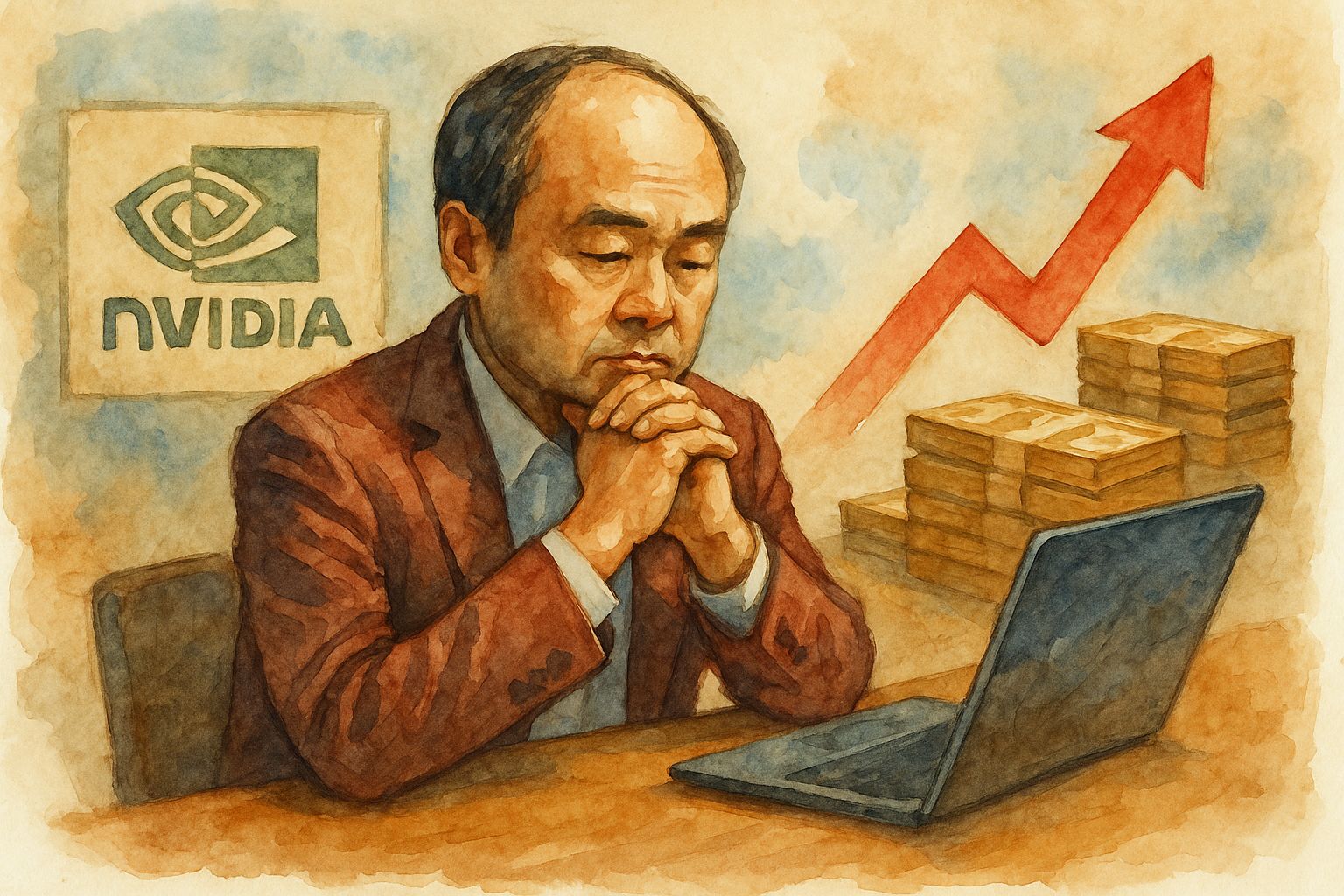
The Recap: SoftBank has sold its entire $5.8 billion stake in chipmaker Nvidia, a move detailed in its latest earnings report. The sale isn’t a retreat from AI but a strategic pivot to pour even more capital directly into ventures like OpenAI.
Unpacked:
The sale frees up capital for SoftBank's planned $30 billion investment in OpenAI, shifting its strategy from backing AI infrastructure to funding the core technology directly.
This move echoes a past decision where founder Masayoshi Son sold an Nvidia stake in 2019, a move he later regretted after missing a historic rally.
The funds are earmarked for huge AI initiatives, including the massive $500 billion Stargate data center project in partnership with OpenAI and Oracle.
Bottom line: SoftBank is betting that the ultimate value in the AI race lies with the platforms like OpenAI, not just the hardware providers. This massive capital shift from a public market leader to a private disruptor signals a new phase of conviction in the AI economy.
Where AI Experts Share Their Best Work
Join our Free AI Automation Community

Join our FREE community AI Automation Mastery — where entrepreneurs, AI builders, and AI agency owners share templates, solve problems together, and learn from each other's wins (and mistakes).
What makes our community different:
Real peer support from people building actual AI businesses
Complete access to download our automation library of battle-tested n8n templates
Collaborate and problem-solve with AI experts when you get stuck
Dive into our course materials, collaborate with experienced builders, and turn automation challenges into shared wins. Join here (completely free).
The Shortlist
CoreWeave reported a $55.6B contracted revenue backlog driven by major deals with Meta and OpenAI, but revised its full-year guidance downward due to data center construction delays.
Google joined OpenAI and Perplexity in partnering with Indian telecom giants, offering free or subsidized AI tools to capture a share of the country’s 900M+ internet user market and train their models on diverse data.
AI Resume Builder revealed in a new survey that 30% of companies plan to replace employees with AI in 2026, with HR and recruiting roles among the top targets for automation.
Arc Raiders drew a negative review score from Eurogamer, which cited the game’s use of “aggressively mediocre” AI-generated voice lines as an artistic and ethical failing.
Signing off,
David, Lucas, Mitchell — The Recap editorial team